
In 2026, the optical industry continues to move toward full automation to combat rising labor costs and meet consumer demands for rapid turnaround times. If you are looking to upgrade your lab or open a new optical boutique, the auto lens edger is likely your most significant investment.
Understanding the current market pricing—which can range from $10,000 to over $65,000—is essential for making a data-driven decision. This guide breaks down the key factors influencing the cost of auto lens edgers this year.
The Foundational Tiers of Auto Lens Edger Pricing
The cost spectrum of auto lens edgers is broad, generally categorized into three distinct tiers:
Here is the information in both list and table formats:
Categorization List
- Entry-Level / Budget Edgers
- Price Range: $1,000 – $4,000
- Key Features: Manual or semi-automatic. Designed for basic edging of standard materials (e.g., CR-39, basic glass). Often require significant operator input.
- Typical Use Case: Very low-volume practices or as backup units.
- Mid-Range / Workhorse Edgers
- Price Range: $8,000 – $18,000
- Key Features: Patternless edgers offering a good balance of automation, precision, and material compatibility.
- Typical Use Case: Independent optometry practices or smaller optical labs with moderate daily volumes.
- High-End / Industrial Systems
- Price Range: $25,000 – $55,000+
- Key Features: Fully automated, high-throughput machines with advanced features like 3D drilling, complex beveling, and integrated blocking.
- Typical Use Case: The backbone of large optical chains and wholesale laboratories.
Detailed Comparison Table
| Category | Price Range (USD) | Core Characteristics | Typical Application |
|---|---|---|---|
| Entry-Level / Budget | $1,000 – $4,000 | Manual or semi-automatic. For standard materials (CR-39, basic glass). Significant operator input required. | Very low-volume practices; backup units. |
| Mid-Range / Workhorse | $8,000 – $18,000 | Patternless. Good balance of automation, precision, and material compatibility. | Independent optometry practices; smaller labs with moderate daily volume. |
| High-End / Industrial | $25,000 – $55,000+ | Fully automated, high-throughput. Advanced features (3D drilling, complex beveling, integrated blocking). | Large optical chains; wholesale laboratories. |
Key Factors Influencing Auto Lens Edger Machine Prices
The key factors influencing auto lens edger machine prices include the level of automation, technological features (such as AI integration and lens material compatibility), production capacity, and brand reputation.
Automation Level and Production Capacity
The degree of automation is a primary price determinant.
- Fully automatic systems are the most expensive due to minimal manual intervention and high efficiency, designed for high-volume laboratories and chain retailers.
- Semi-automatic models are a more affordable middle ground, offering a balance of manual control and automation, suitable for mid-sized labs or growing practices.
- Production volume directly correlates with cost; machines built for continuous, high-volume output (100+ lenses/day) use more durable components and advanced diagnostics, commanding a premium price compared to low-volume models for small shops.
Technology and Features
Advanced auto lens edgers come equipped with features like:
- Multi-axis edging: Enables complex lens shapes and beveling.
- Touchscreen interfaces: Simplify programming and operation.
- Automatic calibration: Ensures consistent precision.
- Material compatibility: Ability to edge various lens types (plastic, glass, polycarbonate).
More sophisticated technology generally increases the price but enhances productivity and versatility.
Build Quality and Associated Costs
The overall quality of materials and necessary ongoing support influence the total cost of ownership (TCO).
Durable construction materials, such as cast-iron bases and corrosion-resistant components, ensure longevity and stability, contributing to a higher initial price for premium machines.
Brand and Manufacturer Reputation
Established brands like Shanghai LINK invest heavily in research, design, and quality control. Their machines often come with certifications such as ISO 13485 and FDA approvals, reflecting superior reliability and safety. Brand reputation influences pricing due to guaranteed performance and after-sales support.
Cost vs. Value: Is the Higher Price Worth It?
While high-end auto lens edgers come with a higher upfront cost, they often provide better value in the long run due to their speed, durability, and reliability. The increased processing speed and reduced need for manual intervention can improve overall lab efficiency, potentially leading to a faster ROI (Return on Investment) for larger operations.
For small practices or those just starting, an entry-level or mid-range model might be a better choice, as it can still meet basic needs without a substantial financial commitment.
How to Choose the Right Auto Lens Edger for Your Needs?
Choosing the right machine depends on your specific requirements:
- Small clinics or solo practices: May benefit from an entry-level or mid-range model with a focus on basic functionality and lower price.
- High-volume labs: Should opt for advanced models with higher production capacity and advanced automation to maximize efficiency and output.
- Budget-conscious buyers: Look for brands that offer a balance of price and features. Some lesser-known brands might provide sufficient functionality at a more affordable price.
Automatic edge grinding machine brand from China – Shanghai LINK
Shanghai LINK Instruments is a trusted Chinese brand, known for its reliable and efficient automatic edge grinding machines. Offer high precision and performance, making them ideal for optical labs and eyewear manufacturers.
Key Features:
- High Precision for accurate lens shaping
- Minimal Waste for cost-effective operations
- User-Friendly with easy-to-operate interfaces
- Durable and built to last
Recommended Product:
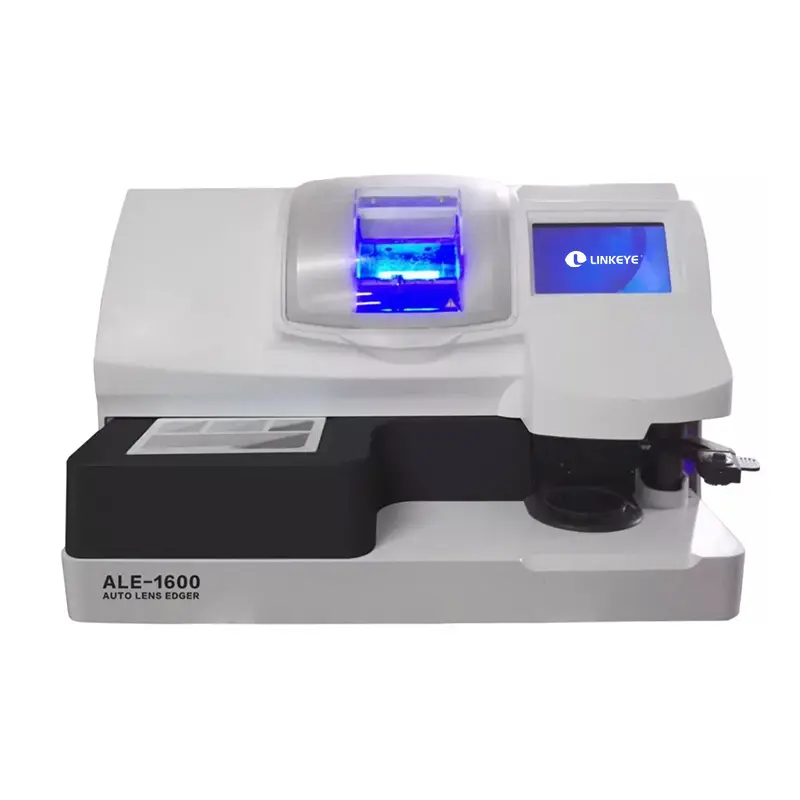
ALE-1600 Auto Lens Edger
– High precision and automation for large-scale production.
Conclusion
Understanding what affects the cost of auto lens edger machines empowers optical professionals to select equipment that balances budget with performance. Prioritizing technology, brand reputation, automation, and service ensures a worthwhile investment that enhances productivity and patient satisfaction.
