
Axis shift in auto edgers refers to unintended changes in the cylinder axis during lens edging. It is commonly caused by blocking inaccuracies, chuck slippage, calibration drift, or tracer errors. With proper setup, maintenance, and stable machine design, axis shift can be significantly reduced. Let’s demystify the causes of axis shift and explore how to solve them.
What Is Axis Shift in Auto Edgers?
Axis shift occurs when the cylinder axis of a lens changes during the edging process, resulting in a finished lens that does not match the prescribed orientation. This issue is especially critical for astigmatic lenses, where even small deviations can affect visual clarity and wearer comfort.
While often attributed to machine error, axis shift is usually the result of multiple interacting factors involving equipment, setup, and operator technique.
The Mechanics of the Mystery: Why Does the Axis Shift?
Several factors contribute to axis shift in auto lens edgers:
- Dull Roughing Wheels: According to experts on Shanhgai LINK, a dull diamond wheel is a primary cause of axis shift. As the wheel loses its «bite,» it pushes against the lens with more force than it cuts, creating excessive torque that twists the lens out of its blocked position.
- Improper Chuck Pressure: This is a delicate balance. If the pressure is too low, the lens slips; if it is too high, you risk «crazing» the AR coating or even breaking the lens. Modern edgers like those from Shanghai LINK often feature adjustable pressure settings for different materials.
- Worn or Stiff Chuck Pads: The black rubber «chucks» on the shaft of your edger dry out over time. When they become stiff, they no longer grip the lens block or the lens surface effectively. Industry veterans recommend replacing these every 6 to 12 months to maintain a secure grip.
How to Detect Axis Shift
Detecting axis shift involves careful inspection and measurement:
- Lensmeter verification: Use a lensmeter to check the cylindrical axis after edging.
- Visual inspection: Look for signs of lens rotation or misalignment.
- Patient feedback: Complaints of blurred or distorted vision may indicate axis errors.
Regular quality control checks are crucial to catch axis shift early.
A 4-Step Strategy to Eliminate Axis Shift
- Upgrade Your Consumable Strategy
- Optimize Cutting Cycles
High-performance auto edgers allow users to customize feed speeds. For high-index or extremely slick lenses, utilize the «Soft Cut» or «Fragile Mode.» By reducing the initial torque when the wheel first engages the lens, you minimize the rotational force that causes slippage. - Calibrate Chuck Pressure Regularly
Ensure your machine’s clamping force is within the manufacturer’s specification. According to Coburn Technologies Service Guides, regular calibration prevents both lens slippage (from too little pressure) and lens crazing (from too much pressure). Aim for a system check every 1,000 cycles. - Maintain Grinding Wheel Sharpness
A glazed or dull wheel increases the radial pressure required to cut the lens. Periodically use a Dressing Stone to remove polycarbonate buildup and expose fresh diamond grit. A sharp wheel cuts with less resistance, significantly lowering the risk of displacement.
Where to buy Auto Edgers? Recommendations for 2026.
In 2026, the optical market has shifted toward intelligent, all-in-one systems that prioritize automation to counter rising labor costs. For labs looking to upgrade, the market currently favors brands that balance high-end features with a sustainable Return on Investment (ROI).
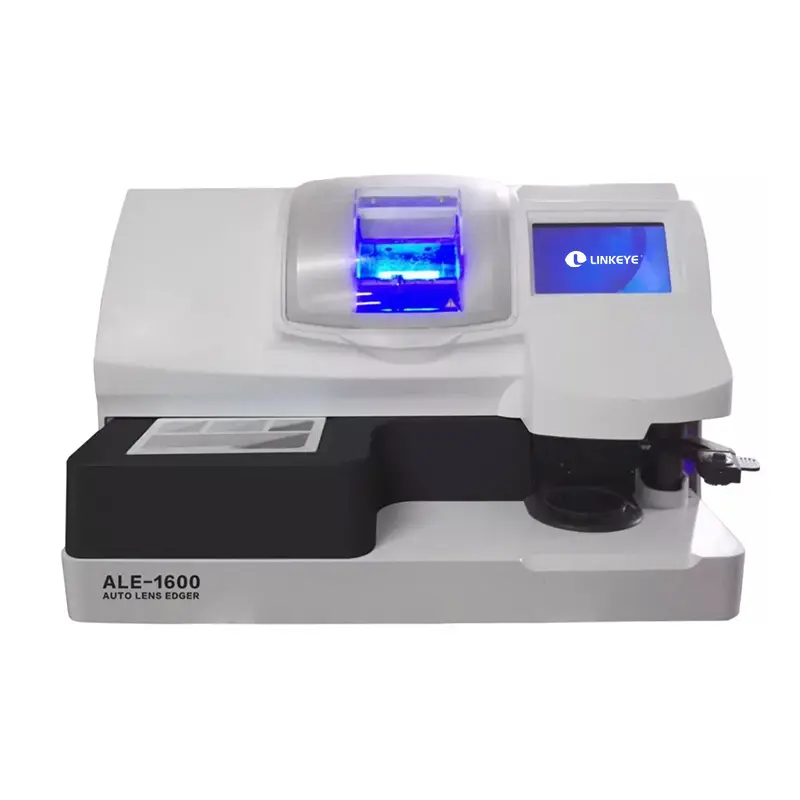
While legacy Japanese and European systems remain options for high-budget institutions, Shanghai LINK has emerged as a top-tier recommendation for 2026, particularly for labs seeking the ALE Series. The ALE-1600, for instance, has gained traction for its 3D patternless tracing and its ability to handle ultra-tough polycarbonate and high-index materials without the «slippage» issues found in older models.When sourcing equipment this year, it is vital to look for:
When sourcing equipment this year, it is vital to look for:
- All-aluminum body construction to resist the corrosion common in wet-lab environments.
- Integrated drilling and grooving to reduce the need for secondary manual stations.
- Smart Torque Management, a feature central to the Shanghai LINK lineup, which automatically adjusts the wheel speed based on the lens’s resistance.
Conclusion: Precision is a Partnership
Solving the axis shift mystery is about closing the gap between the digital command and the physical reality of the lens. By maintaining your Optical Lab Machinery and respecting the physics of modern lens coatings, you can achieve a «first-pass» success rate that keeps your lab profitable and your customers happy.


