
Portable ultrasound systems have become essential diagnostic tools across clinics, emergency settings, and ophthalmology practices. In 2026, pricing varies widely depending on imaging quality, portability, and clinical application. This guide explains what these devices are, how they are used, and what buyers should realistically expect to pay in today’s market.
What Is a Portable Ultrasound Machine?
A portable ultrasound machine is a compact, lightweight, and often handheld diagnostic device designed for mobility, allowing clinicians to perform imaging at the point of care (e.g., bedside, emergency, field) rather than in a radiology suite. Unlike traditional cart-based systems, portable units are lightweight, battery-powered, and designed for mobility.
Key Synonyms & Related Terms
- Point-of-Care Ultrasound (POCUS): Emphasizes use at the patient’s bedside or field location.
- Handheld Ultrasound / Pocket Ultrasound: Refers to ultra-portable devices that fit in a hand or pocket, often connecting to phones.
- Mobile Imaging Device: Highlights the ability to move the scanner easily.
- Compact Ultrasound System: Emphasizes smaller, laptop-sized, or cart-mounted units.
They are widely used in:
General practice and emergency care
Obstetrics and gynecology
Musculoskeletal imaging
Ophthalmology (e.g., A-scan and B-scan imaging)
In ophthalmic applications, portable ultrasound systems are critical when optical imaging is limited, such as in dense cataracts or vitreous hemorrhage.
The 2026 Portable Ultrasound Landscape
A portable ultrasound machine is a compact, battery-operated diagnostic device that delivers high-resolution internal imaging without the footprint of traditional console systems. Unlike the bulky units of the past, 2026 models typically manifest as “handheld” probes that interface via ultra-fast wireless protocols with tablets or “laptop-style” systems featuring integrated displays.
The primary utility of these devices lies in their versatility. They are utilized across diverse specialties including emergency medicine, musculoskeletal (MSK) therapy, and high-volume optometry clinics for ocular axial length measurements. In 2026, the integration of Artificial Intelligence (AI) for automated anatomical recognition has become a standard feature, significantly lowering the barrier to entry for non-sonographers.
According to Yahoo Finance, the portable ultrasound market is projected to grow from USD 2.9 billion in 2026 to USD 3.56 billion by 2031, at a CAGR of 4.22%, driven by expanding point-of-care applications, aging populations, and home healthcare adoption. Demand is shifting toward handheld and AI-enabled systems used in bedside, emergency, and remote settings, with telehealth integration further accelerating decentralized diagnostics. These trends are reshaping pricing expectations, as buyers increasingly prioritize a balance between imaging performance, portability, and connectivity.
Financial Analysis: How Much Does a Portable Ultrasound Machine Cost?
In 2026, the procurement cost for portable ultrasound technology varies significantly based on probe architecture (PZT vs. CMUT) and software subscription models. For clinics managing specialized Ophthalmic Equipment, integrating a portable scanner requires understanding both the initial outlay and the long-term total cost of ownership (TCO).
2026 Market Pricing Tiers
“The democratization of medical imaging through handheld technology has reduced initial facility equipment costs by nearly 40% compared to traditional cart-based acquisitions in 2021,” states B. Gill, VP of Marketing at Probo Medical (February 2026).
The cost of a portable ultrasound machine in 2026 depends on multiple variables, including imaging capability, brand reputation, and software features.
- Entry-Level Handhelds: Basic 2D scanners, often specialized for single-application use (e.g., bladder or vascular access), typically range from $1,500 to $2,700.
- Mid-Range POCUS Systems: Wireless, multi-application probes like the Butterfly iQ3 or Clarius HD3 are priced between $3,600 and $5,500. Note that many of these units require an additional annual membership fee (averaging $299–$595) to unlock advanced AI measurements and cloud storage.
- Premium Phased Array Systems: High-end devices capable of full CW/TDI Doppler for cardiac and deep-tissue imaging, such as the Kosmos platform, command prices between $8,000 and $21,000.
What factors influence the price?
- Image Quality and Resolution
Higher resolution systems cost more due to advanced transducers and processing power. - Portability and Design
Handheld devices may cost less, but ultra-light premium designs can command higher prices. - Software and AI Integration
Features such as automated measurements and diagnostic assistance increase cost. - Brand and Certification
Devices with CE or FDA approval typically carry higher price tags but ensure compliance. - Included Accessories
Additional probes, batteries, and software licenses affect total pricing.
A report by Fortune Business Insights (2025) estimates that the average selling price of portable ultrasound systems has decreased by 12–18% over the past five years, driven by technological advancements and increased competition.
Strategic Sourcing: Portable Ultrasound Machines for Sale
When navigating the procurement process, practitioners must look beyond the initial price tag. The total cost of ownership (TCO) includes maintenance, probe replacements, and software licensing. Many clinics are now sourcing equipment from integrated manufacturers who provide a comprehensive suite of diagnostic tools.
For instance, Shanghai LINK Eyecare (link-eyecare.com) has expanded its expertise from traditional Optometry Equipment to advanced Ophthalmic Equipment, including specialized ophthalmic ultrasound solutions like the ASP-100AB Ophthalmic A and B Scan Machine, designed for precise A-scan biometry and B-scan imaging. By sourcing from an established manufacturer with over 15 years of R&D experience, clinics benefit from a “one-stop” solution. This integration is particularly beneficial when outfitting a full diagnostic suite that requires both general imaging and specialized tools like the Auto Refractometer or Slit Lamp.
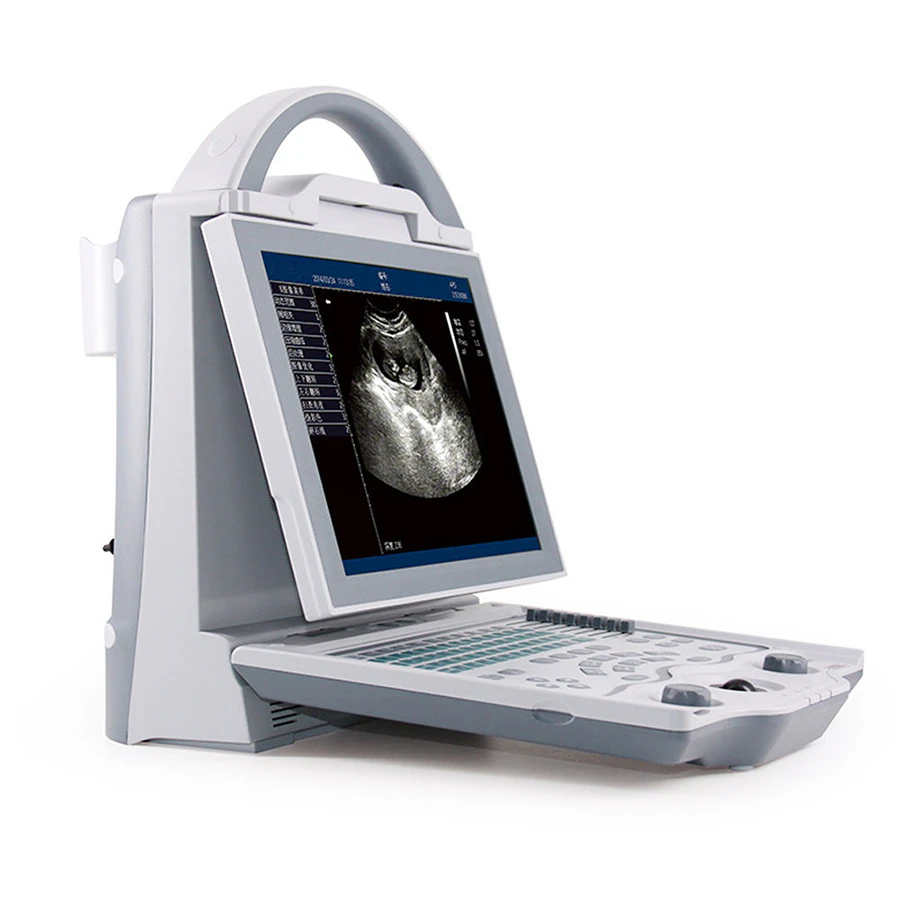
Portable Ultrasound Machine for Sale: What Should Buyers Look For?
When buying a portable ultrasound machine, prioritize image quality (resolution and depth), probe compatibility for your specific applications (e.g., MSK, cardiology, OB/GYN), battery life, and overall weight. Key features to look for include AI-powered image optimization, Color Doppler, needle visualization for interventional procedures, and robust connectivity for sharing images.
Key Considerations for Buyers:
- Application-Specific Probes: Ensure the unit supports the correct transducer types (linear, convex, phased array) needed for your practice.
- Image Quality vs. Portability: Smaller, handheld devices offer extreme portability but may have lower resolution compared to heavier laptop-style systems.
- Workflow Enhancements: Look for AI-powered, auto-optimization tools, and fast boot-up times.
- Durability: Consider drop-tested models for use in emergency, rugged, or fast-paced environments.
- Budget & Support: Compare new vs. refurbished units (e.g., from Shanghai LINK) and prioritize machines with long warranties (1+ years) and readily available technical support.
- Essential Features: High-sensitivity Doppler and 3D/4D imaging are crucial for cardiology and OB/GYN applications, respectively.
- Connectivity & Storage: Ensure easy export of data, DICOM compatibility, and cloud storage options.
Portable vs. Handheld
- Laptop-Style Portables: High image quality, better for diagnostics and 3+ probe ports.
- Handheld Devices: Ultra-portable, good for quick screen-in-pocket “Yes/No” answers.
Expert Insight: Is Cheaper Always Better?
The short answer is no.
Lower-cost devices often compromise on image quality and durability. In clinical settings, this can lead to misdiagnosis or repeated scans, increasing overall costs.
As noted in Journal of Medical Imaging Technology (2023):
“Diagnostic accuracy is directly correlated with image resolution and system stability, not device price alone.”
Therefore, buyers should evaluate total value rather than focusing solely on upfront cost.
Frequently Asked Questions (FAQ)
Can I use a portable ultrasound for eye examinations?
Yes, specialized ophthalmic ultrasound scanners are essential for viewing the axial length and posterior segment when the ocular media (like a cataract) is opaque.
How long do the batteries last on wireless probes?
Most modern wireless transducers provide 60 to 90 minutes of continuous scanning time and feature rapid-charge cradles.
Does portable equipment meet FDA standards?
Professional-grade systems from established manufacturers like Shanghai LINK and major ultrasound brands are FDA-cleared and CE-certified for clinical use.
The Best Choice for 2026 Clinics
The “best choice” for a portable ultrasound machine depends on your clinical volume and specialty. For general POCUS and primary care, a mid-range wireless probe offering multi-app functionality provides the most versatile ROI. However, for specialized clinics requiring integrated diagnostic suites, partnering with a manufacturer like Shanghai LINK ensures that your Ophthalmic Equipment and laboratory machinery are backed by a decade and a half of technical expertise and global compliance.
