
In 2026, an auto lens edger can cost from roughly 900-$2,000 for a basic unit to more than $30,000 for an advanced patternless system. The final price depends on tracing technology, finishing functions, lens compatibility, configuration, freight, training, and after-sales support.
This guide will describe how to compare quotations and avoid misinvestment resulting from the intrusion of immediate profits.
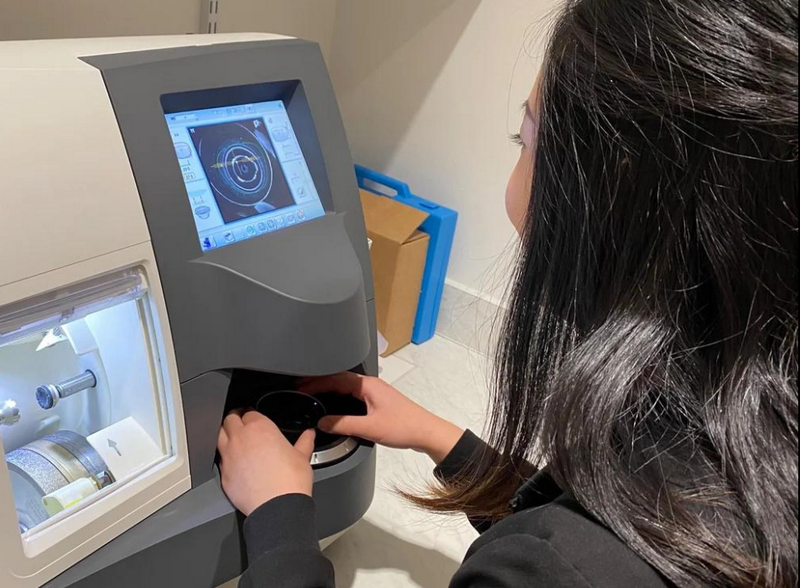
How Much Does an Auto Lens Edger Cost in 2026?
There is no single standard price. Publicly advertised prices observed in September 2026 show substantial differences between basic automatic edgers and integrated finishing systems.
- Basic automatic machines: approximately $900–$2,000. These models usually provide conventional edging and beveling, with fewer digital workflow functions.
- 2D patternless systems: approximately $3,400–$7,000. A scanner or tracer is often included, although the blocker, pump, and accessories may be quoted separately.
- 3D patternless systems: approximately $7,000–$13,000. These machines generally provide more accurate frame tracing, automatic bevel control, grooving, polishing, and improved shape management.
- Advanced integrated systems: $15,000–$20,000 or more. Higher-priced configurations may combine tracing, blocking, drilling, data management, and complex finishing functions.
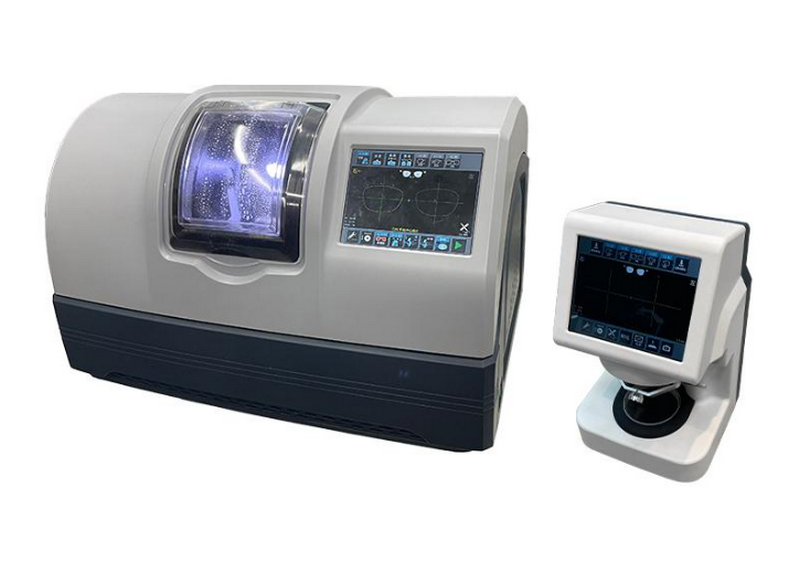
For comparison, OPTI USA listed automatic systems at $2,368, a 2D patternless edger at $6,666, and 3D systems between $11,961 and $15,361 in its 2026 online catalog (OPTI USA, accessed September 17, 2026). Another North American retailer advertised a patternless system at $20,800 (Optical 411, accessed September 17, 2026).
These figures are market references, not LINK Instruments quotations. Distributor margins, taxes, freight, installation, and regional support can change the landed price considerably.
The Main Factors Behind Auto Edger Pricing
1. Automation Level
A conventional auto edger machine may depend on patterns or an external tracer. A patternless system digitizes the frame contour and transfers the shape directly to the edger.
More capable systems may offer:
- 2D or 3D tracing: 3D tracing records frame curvature as well as horizontal and vertical dimensions.
- Digital shape editing: Technicians can change lens width, height, axis, and decentration before edging.
- Automatic centering: This reduces manual alignment and helps control unwanted axis deviation.
- Integrated blocking: Combining centering and blocking can shorten the finishing workflow.
The LINK ALE-1600, for example, combines scanning, centering, and edging in a three-in-one configuration. LINK states that its optical scanner can trace a shape in approximately three seconds and that the machine supports digital adjustment of length, width, axis, and decentration (LINK Instruments, accessed September 17, 2026).
2. Processing Functions
Every additional finishing process affects machine design and cost. A basic optical edger machine may produce only a standard bevel or flat edge. A more complete automatic edging machine can add grooving, polishing, safety chamfering, and drilling.
Before requesting a quotation, determine whether the lab processes:
- Full-rim frames requiring controlled bevel placement
- Semi-rimless frames requiring precise grooving
- Rimless eyewear requiring drilling
- High-index or coated lenses requiring lower clamping pressure
- Hydrophobic lenses that need dependable anti-slip control
Paying for unused functions raises the initial investment. However, omitting a necessary function can force the shop to outsource jobs, which increases turnaround time and handling risk.
3. Lens Material Compatibility
CR-39, polycarbonate, Trivex, high-index resin, and glass behave differently during grinding. The wheel arrangement, processing pressure, motor power, cooling system, and drop speed must suit the intended materials.
LINK’s compact ALE-520 auto lens edger is specified for CR-39, glass, and PC lenses. For more demanding work, the ALE-3200 supports glass, plastic, and polycarbonate while providing beveling, grooving, polishing, and chamfering. Its published specifications state a size accuracy of ±0.05 mm and axis accuracy of ±1° (LINK Instruments, accessed September 17, 2026).
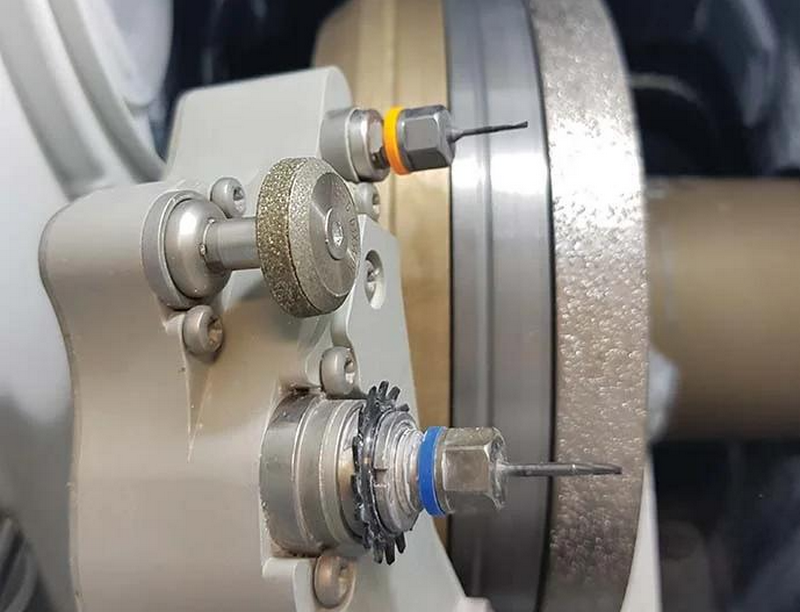
For more factors influencing the price, you can read our article: “Auto Lens Edger Machine Price Guide: What Affects the Cost?“
Equipment Configuration and Hidden Costs
The displayed machine price rarely represents the complete investment. An auto lens edger quotation should identify every component included in the package.
| Cost item | Questions to ask |
|---|---|
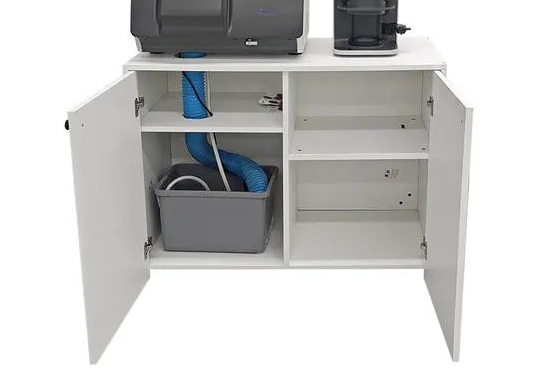
| Edger configuration | Are the tracer, blocker, scanner, pump, and cabinet included? |
| Consumables | What do wheels, blocks, pads, filters, and chuck adapters cost? |
| Electrical setup | Is the machine configured for 110 V/60 Hz or 220–230 V/50 Hz? |
| Freight | Does the quotation cover export packing, insurance, and delivery? |
| Installation | Is remote or on-site commissioning included? |
| Warranty | Which parts, labor, and freight charges are covered? |
| Service | How quickly can the supplier provide diagnostics and spare parts? |
International buyers should also specify the Incoterm and named place in the purchase contract. Incoterms® 2020 contains 11 rules that allocate transport obligations, costs, and risks between buyer and seller (International Chamber of Commerce, 2020). Therefore, an EXW price cannot be compared directly with a CIF or DAP quotation.
How Should Buyers Compare Auto Lens Edger Quotations?
Compare identical technical and commercial requirements. The lowest headline price may produce the highest five-year ownership cost.
- Define the workload. State the expected number of jobs per day, frame types, lens materials, and required finishing processes.
- Request a live processing test. Ask the manufacturer to edge sample jobs that represent your routine work, including high-index or slippery coated lenses when relevant.
- Inspect repeatability. Evaluate frame fit, axis retention, bevel position, surface finish, chipping, and the number of remakes.
- Confirm the complete package. Require an itemized quotation for the machine, tracer, blocker, pump, tools, packing, freight, training, and initial consumables.
- Examine service capacity. Ask for manuals, maintenance schedules, troubleshooting procedures, spare-parts availability, and warranty terms in writing.
Documents to Request Before Ordering
A serious supplier should provide the product datasheet, electrical specifications, packing dimensions, conformity documents applicable to the destination market, warranty terms, installation requirements, and a pro forma invoice with an exact model and configuration.
Clinics or first-time buyers can review What Is a Lens Edger Machine? before preparing their specifications. Smaller finishing operations may also consult What Is the Best Auto Edger Machine for Small Labs? to distinguish necessary functions from expensive extras.
Why Consider LINK Instruments?
LINK Instruments currently presents eight models in its auto lens edger range, from compact machines to integrated patternless systems. This range allows an optical shop, hospital, distributor, or independent laboratory to match the equipment to its actual workflow.
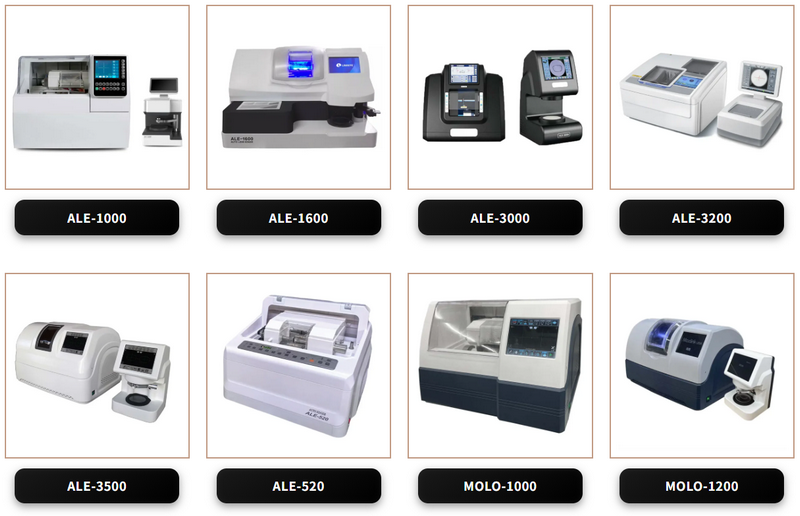
According to the company website, LINK has 19 years of manufacturing experience, supplies customers in more than 100 countries, and holds ISO 9001, ISO 13485, and CE certifications. Buyers should still request the applicable certificate and model-specific documentation during procurement.For distributors, LINK’s broad ophthalmic portfolio also enables combined orders covering refraction, examination, and optical laboratory equipment.
Frequently Asked Questions
Is a low-cost auto edger suitable for a small optical shop?
Yes, if it processes the shop’s normal lens materials and frame types. Check accuracy, grooving needs, consumable availability, and local service before purchasing.
Does an auto lens edger machine include a tracer?
Yes, if it processes the shop’s normal lens materials and frame types, a low-cost or compact automatic lens edger is suitable for a small optical shop if your daily volume ranges from 1 to 15 jobs a day and you match the machine to your space and material needs. if your daily volume ranges from 1 to 15 jobs a day and you match the machine to your space and material needs.Check accuracy, grooving needs, consumable availability, and local service before purchasing.
What increases automatic edging machine maintenance costs?
Grinding-wheel wear, blocked water lines, dirty filters, degraded chuck pads, calibration errors, and delayed replacement of small components increase maintenance and remake costs.
Can one machine process glass and polycarbonate lenses?
Yes, a single machine can process both glass and polycarbonate lenses, particularly in optical laboratories for edging and finishing. Verify material compatibility in the manufacturer’s technical specification.
How can I obtain an accurate LINK auto edger price?
Send LINK Instruments your required lens materials, frame types, daily workload, finishing functions, destination country, voltage, and preferred shipping term. The manufacturer can then prepare a model-specific quotation rather than an imprecise catalog estimate.
Conclusion:The Best Choice for 2026
The best auto edger should be able to complete the processing tasks stably and reliably, and equipped with reliable quality parts and perfect technical support. Compact equipment may be enough for conventional full-frame glasses processing; busy business machining centers should consider a template-free integrated system with 3D tracing, grooving, polishing, and controlled bevel placement.
Review the LINK Instruments auto lens edger range and request an itemized quotation, processing demonstration, and distributor terms. This provides a reliable basis for comparing the purchase price, landed cost, and long-term operating value.
