
US optical distributors and labs choose lens edging machine suppliers based on processing accuracy, daily output, maintenance costs, and support. In 2026, options fall into three main categories: established US distributors, global optical brands, and direct factory manufacturers offering varying automation and OEM customization.
For distributors comparing manufacturing flexibility, product selection, and wholesale purchasing opportunities, LINK Instrument deserves consideration alongside Coburn Technologies, Essilor Instruments, LINKEYE, and NIDEK. This guide compares five suppliers and explains how to select a suitable lens edging machine for the US market.
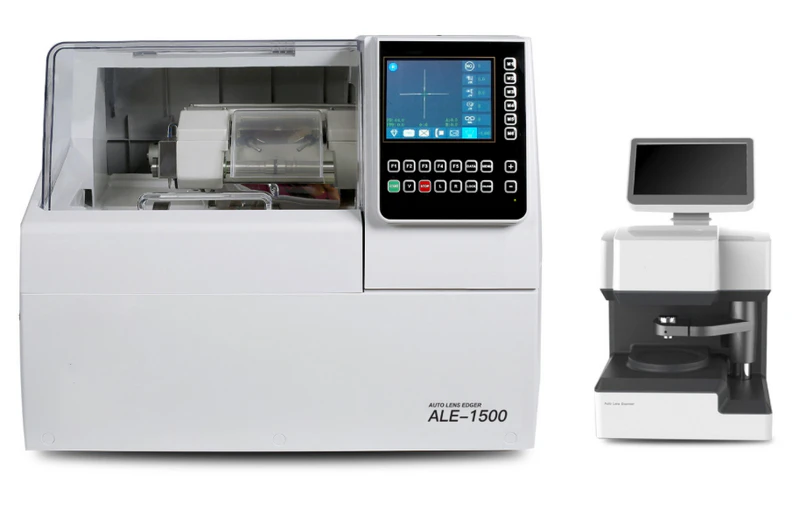
What Makes a Good Optical Lens Edging Machine?
An optical lens edging machine cuts and finishes ophthalmic lenses to match the shape and dimensions of an eyeglass frame. Modern automatic systems can combine tracing, centering, blocking, grinding, beveling, grooving, and polishing in different configurations.
Before selecting a supplier, US distributors should evaluate these factors:
- Processing accuracy: Check dimensional tolerance, axis alignment, and repeatability.
- Lens compatibility: Confirm support for CR-39, polycarbonate, high-index, Trivex, and glass lenses where required.
- Finishing functions: Review flat edging, beveling, grooving, polishing, drilling, and safety chamfering.
- Automation: Evaluate automatic tracing, centering, shape recognition, and job storage.
- Electrical compatibility: Confirm 110–120V or 220–240V configurations and 60Hz operation as applicable.
- After-sales service: Check technical support, spare parts, warranty coverage, and operator training.
For distributors, machine performance is only one part of the decision. Reliable technical support and a sustainable supply relationship are equally important.
5 Optical Lens Edging Machine Suppliers to Consider in 2026
1. LINK Instrument – Factory-Direct Lens Edging Solutions
LINK Instrument is a Chinese manufacturer and supplier of ophthalmic equipment and optical laboratory machinery. Its product portfolio includes automatic lens edgers, autorefractors, lensmeters, phoropters, slit lamps, and other optometry equipment.
The company’s Auto Lens Edger series includes several models designed for different processing requirements.
ALE-1000: This automatic lens edger combines lens centering, blocking, and edging. It supports beveling, grooving, and polishing, with shape memory for repeat orders. Its published specifications include a lens processing range of 22–80 mm.
ALE-1600: A 3-in-1 system combining scanning, centering, and edging. Its optical scanner can complete tracing in approximately three seconds. Digital template editing provides control over lens dimensions, axis, and decentration.
ALE-3200: Designed for more demanding optical laboratories, this model offers 3D intelligent scanning and multiple finishing functions, including beveling, grooving, polishing, and safety chamfering. LINK publishes dimensional accuracy of ±0.05 mm and axis-angle accuracy of ±1°.
For US distributors, LINK Instrument offers several potential advantages:
- Direct communication with the manufacturer.
- Multiple automatic edger configurations.
- OEM and ODM cooperation opportunities.
- Factory-direct wholesale quotations.
- Remote product demonstrations and technical assistance.
- Access to a broader ophthalmic equipment portfolio.
LINK Instrument is particularly worth evaluating for importers and distributors seeking alternative sourcing options and flexible product configurations. Buyers should confirm US voltage, plug specifications, applicable certifications, shipping arrangements, and local service provisions before ordering.
Best suited for: Importers, optical equipment distributors, independent optical shops, and buyers seeking manufacturer-direct purchasing.
Explore the LINK Instrument Auto Lens Edger Series to compare available models.
2. Coburn Technologies – US-Based Lens Finishing Solutions
Coburn Technologies is an established American provider of ophthalmic lens processing equipment. The company offers lens edgers, tracers, blockers, software, consumables, and technical services.
Its HPE series includes several options:
- HPE-990: A premium finishing system designed for specialty lenses, high-curvature processing, and deep step bevel applications.
- HPE-910: Supports multiple bevel types and edging styles, including processing of high-curve lenses.
- HPE-410: A compact system aimed at practices introducing in-house lens finishing.
Coburn’s US presence and established service infrastructure make it an important supplier to consider for distributors prioritizing domestic support and access to finishing equipment.
Best suited for: US optical shops, independent laboratories, and distributors prioritizing domestic service support.
3. Essilor Instruments – Advanced Lens Finishing Technology
Essilor Instruments offers a broad range of optical finishing equipment, including the Mr Blue 2.0, Pro-E, and Neksia series.
Depending on the model and configuration, these systems support functions such as beveling, flat edging, polishing, drilling, and specialized lens finishing.
Its equipment is relevant to laboratories and optical businesses seeking established finishing workflows and different levels of processing capability.
Best suited for: Established optical laboratories, premium retailers, and distributors serving professional finishing operations.
4.LINKEYE – Precision Lens Edging and Complete Optical Lab Solutions
LINKEYE specializes in optical lens processing equipment, offering a comprehensive range of automatic lens edgers designed for precision, efficiency, and versatile lens finishing. Its product lineup includes advanced 3D patternless lens edgers, such as the ALE-1500, ALE-1600, and MOLO-1200, serving optical shops, professional laboratories, and eyewear manufacturers.
Key features include:
- Advanced 3D Patternless Edging Technology: Supports accurate lens tracing, shape adjustment, and customized lens edging for different frame designs.
- High-Precision Scanning: Models such as the ALE-1600 feature rapid optical scanning, while the ALE-2000G combines optical and 3D mechanical scanning technologies.
- Versatile Lens Processing: Supports different lens materials, including CR-39, glass, polycarbonate, and high-index lenses, depending on the model.
- Multiple Edge Finishing Options: Selected models support bevel edging, flat edging, sharp-edge processing, and polishing for different lens requirements.
- Intelligent Operation and Workflow Efficiency: Features such as touchscreen controls, automatic center positioning, digital shape adjustment, and template data storage help streamline daily lens processing.
Best suited for: Optical shops and laboratories interested in milling technology and blockless processing.
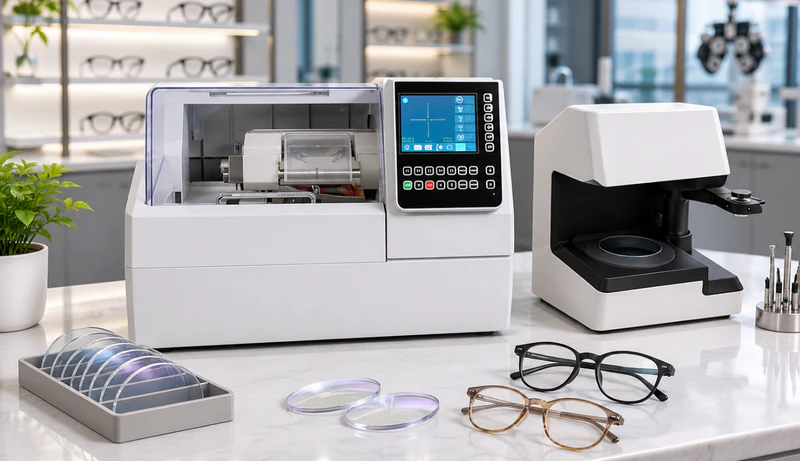
5. NIDEK – Integrated Lens Processing Systems
NIDEK is an established Japanese ophthalmic equipment manufacturer with a broad range of lens finishing technologies.
In January 2026, NIDEK announced the MSE-1 System Edger and ME-1 Multifunction Edger. The MSE-1 combines milling and grinding technologies, supporting different finishing requirements, including high-curve bevels, step bevels, design cuts, and drilling.
This makes NIDEK relevant to distributors serving professional laboratories that require more advanced processing capabilities.
Best suited for: Optical laboratories and distributors targeting advanced lens finishing applications.
Supplier Comparison for USA Distributors
| Supplier | Representative Models | Main Strength | Buyer Profile |
|---|---|---|---|
| LINK Instrument | ALE-1000, ALE-1600, ALE-3200 | Factory-direct sourcing and model variety | Importers and distributors |
| Coburn Technologies | HPE-990, HPE-910, HPE-410 | US-based equipment and service | Optical shops and labs |
| Essilor Instruments | Mr Blue 2.0, Pro-E | Advanced finishing functions | Professional laboratories |
| LINK EYE | ALE-1500, ALE-2000G, and MOLO-1200 | Milling and blockless technology | Modern optical shops |
| NIDEK | MSE-1, ME-1 | Hybrid and multifunction processing | Advanced laboratories |
This is a practical supplier comparison, not an independently verified ranking of sales volume, product quality, or market share. The right choice depends on the distributor’s customers, budget, technical requirements, and local service arrangements.
How Much Does an Optical Lens Edging Machine Cost?
An optical lens edging machine typically costs anywhere from $150 to over $55,000. The optical lens edging machine price depends on automation level, processing functions, brand, software, accessories, and service arrangements. Basic automatic edgers and advanced multifunction systems should not be compared as equivalent products.
When requesting quotations, distributors should consider:
- Automatic or integrated tracing and centering functions.
- Number and type of grinding or milling wheels.
- Beveling, grooving, drilling, and polishing capabilities.
- Lens material compatibility.
- Included accessories, software, and installation.
- Warranty, spare parts, and technical training.
- Shipping, import duties, and US electrical requirements.
There is no single reliable price applicable to all models. Request quotations for identical configurations and calculate the total landed cost before choosing a supplier.
Why Consider LINK Instrument for Your Distribution Business?
For distributors looking to develop an optical equipment portfolio, LINK Instrument offers several points worth evaluating.
Multiple machine configurations: Its Auto Lens Edger range allows buyers to compare different processing functions and automation levels within one product portfolio.
Manufacturer-direct cooperation: Direct factory communication can simplify product discussions, technical clarification, and wholesale quotation requests.
OEM/ODM opportunities: Customization services may help distributors develop products for their regional markets. Specific labeling and customization terms should be confirmed before ordering.
Broader equipment sourcing: Distributors can explore additional ophthalmic and optometry products, potentially simplifying supplier management and combined purchasing.
Technical assistance: Remote demonstrations and training support can help buyers understand machine operation and installation requirements.
For US importers, it is important to verify product-specific regulatory documentation and arrange local maintenance support before introducing a new machine to customers.
Frequently Asked Questions
1. What is an optical lens edging machine?
An optical lens edging machine is a specialized piece of equipment used in optical laboratories and eyewear shops to cut, grind, shape, and finish the outer edges of prescription eyeglass lenses so they fit precisely into a selected eyeglass frame.
2. What is the difference between an automatic and manual lens edging machine?
Automatic machines use programmed or electronically controlled processes to reduce manual intervention. Manual edgers require more operator control and are generally suited to simpler jobs, repairs, or smaller workshops.
3. Which lens materials can an auto edger machine process?
Depending on the model, an auto edger machine may process CR-39, polycarbonate, high-index, Trivex, and glass lenses. Always check the manufacturer’s material compatibility specifications.
4. Can US distributors import lens edging machines directly from China?
Yes. Distributors can work directly with overseas manufacturers. Before purchasing, verify applicable US regulatory requirements, electrical specifications, shipping costs, spare-parts availability, and warranty arrangements.
5. What should distributors ask before purchasing a lens edging machine?
Ask for detailed specifications, demonstration videos, supported lens materials, processing accuracy, included accessories, warranty terms, minimum order quantities, lead times, and technical support arrangements.
cONCLUSION: Match the Machine to Your US Distribution Strategy
The best optical lens edging machine supplier depends on your target customers and business model. Coburn is worth evaluating for US-based equipment support, while Essilor, LINKEYE, and NIDEK offer different approaches to advanced lens finishing.
For distributors interested in factory-direct purchasing, multiple automatic edger configurations, and OEM/ODM opportunities, LINK Instrument is a supplier worth adding to your shortlist. Its ALE series offers options for different optical shop and laboratory requirements.
Visit the LINK Instrument Auto Lens Edger product category to review available models and request a wholesale quotation.
New to lens edging technology? Read our related guide: What Is a Lens Edger Machine? Complete Guide for Beginners.
References
[1] LINK Instrument. Official Website and Company Information. Accessed November 11, 2026.
[2] LINK Instrument. Auto Lens Edger Product Category. Accessed November 11, 2026.
[3] LINK Instrument. ALE-1000 Auto Lens Edger. Accessed November 11, 2026.
[4] LINK Instrument. ALE-1600 Auto Lens Edger. Accessed November 11, 2026.
[5] LINK Instrument. ALE-3200 Auto Lens Edger. Accessed November 11, 2026.
[6] Coburn Technologies. Optical Lens Edgers. Accessed November 11, 2026.
[7] Essilor Instruments. In-Office Edging Equipment. Accessed November 11, 2026.
[8] LINKEYE. Auto Lens Edger Machine. Accessed November 11, 2026.
[9] NIDEK. NIDEK Launches the MSE-1 System Edger and ME-1 Multifunction Edger. January 27, 2026.
