
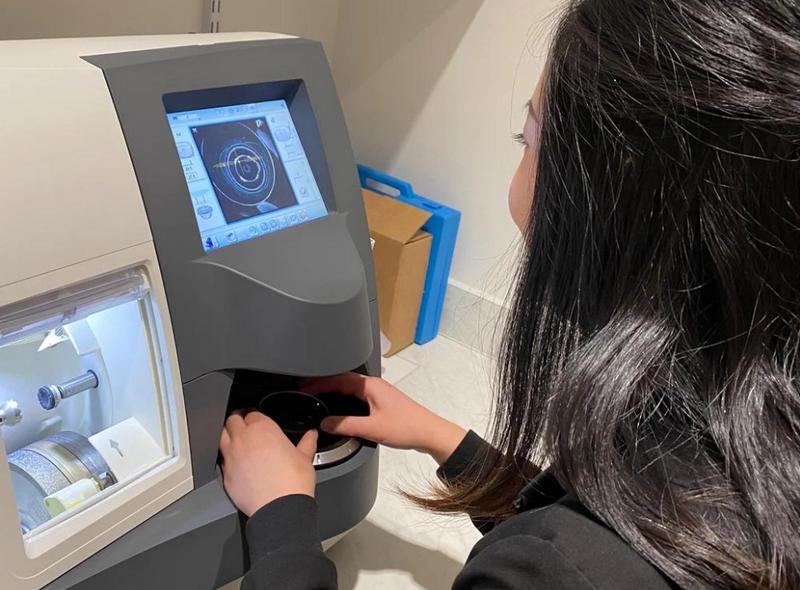
Sourcing a lens edger machine directly from a manufacturer can reduce purchasing layers, improve technical communication, and provide better control over configuration, warranty, and spare parts. For optical shops, clinics, hospitals and distributors, the right thing to do is to assess the machine itself, the factory’s production capacity, certification, service system and overall cost of ownership, not just choosing the lowest quotation.
Why Source a Lens Edger Machine Directly from a Manufacturer?
Establishing a direct relationship with manufacturers means that buyers can work directly with professional teams responsible for engineering design, manufacturing, quality control, and after-sales support.This matters because an edging machine is not a simple commodity; its tracing accuracy, blocking stability, grinding wheels, software, and motor control directly affect finished lens quality.
The market is also moving toward automated systems. According to Fortune Business Insights, the global optical lens edger market was valued at USD 406.2 million in 2025 and is projected to reach USD 641.1 million by 2034, representing a forecast CAGR of 5.2%. The same source reports that automatic patternless lens edgers held the leading product position in 2025.
Therefore, buyers should look beyond a distributor’s product catalogue and identify the actual manufacturer behind the equipment.
What Should You Check Before Contacting a Manufacturer?
Before requesting a quotation, define the work the machine must perform. A manufacturer can only recommend the correct configuration when the application is clear.
1. Identify the Lens Materials
Confirm whether you process:
- CR-39 and standard plastic lenses
- Polycarbonate lenses
- High-index lenses
- Trivex lenses
- Glass lenses
Material compatibility determines the required wheel configuration, processing pressure, cooling system, and finishing functions.
2. Define the Required Edging Functions
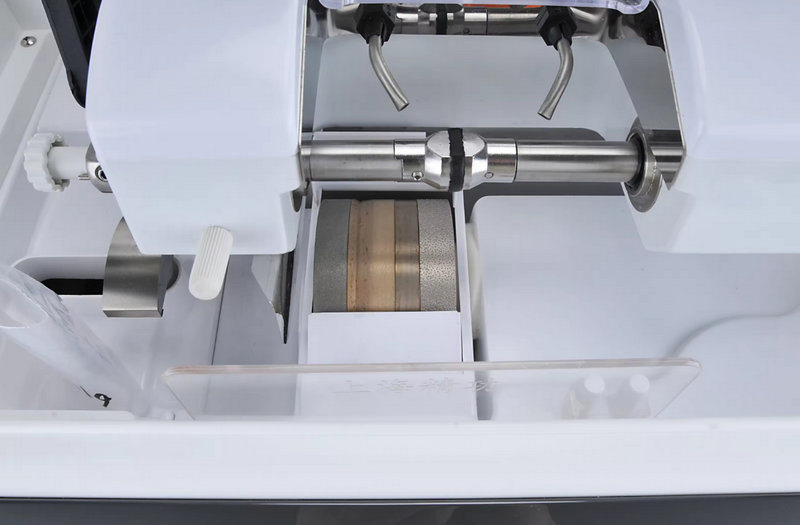
A basic lens edger may only perform standard edging, while a more advanced automatic lens edger machine can support:
- Beveling for full-rim frames
- Grooving for semi-rimless frames
- Polishing for improved edge appearance
- Safety chamfering
- Drilling for rimless applications
- Patternless tracing and digital shape management
For optical shops with diverse prescriptions, these functions can be more valuable than a small difference in the initial machine price.
3. Estimate Daily Processing Volume
A small optical store processing several jobs per day has different requirements from a wholesale laboratory running continuously.
Daily volume affects the importance of motor durability, processing speed, wheel life, cooling capacity, automation, and maintenance access.
For example, a compact machine may be sufficient for an independent optical shop, while a high-volume laboratory may require a more advanced multi-function system.
How to Verify That a Supplier Is Really a Manufacturer
Not every company advertising a lens edging machine is the manufacturer. Some are trading companies or regional distributors.
A practical verification process should include:
Factory information: Ask for the manufacturer’s company name, production location, manufacturing capabilities, and product development information.
Product range: A genuine manufacturer normally has a structured product portfolio rather than one or two unrelated machines.
Technical documentation: Request complete specifications, operating manuals, electrical requirements, lens compatibility, and processing functions.
Quality certifications: Check whether certificates correspond to the actual manufacturer and relevant product.
After-sales capability: Confirm spare parts availability, remote technical support, warranty terms, and operator training.
For medical-device-related manufacturing, ISO 13485 is particularly relevant because it establishes quality-management requirements for organizations involved in the design and manufacture of medical devices. ISO confirmed the 2016 edition as current following its 2025 review.
Compare Manufacturers by Technical Capability, Not Price Alone
The cheapest quotation is rarely the best procurement decision.
When comparing a lens edging machine, use the same technical checklist for every supplier.
| Procurement factor | What to compare | Why it matters |
|---|---|---|
| Lens compatibility | Plastic, PC, Trivex, high-index, glass | Determines application range |
| Tracing | 2D/3D, integrated or separate | Influences shape accuracy |
| Accuracy | Size and axis tolerance | Affects lens-to-frame fit |
| Functions | Bevel, groove, polish, drill | Determines job versatility |
| Automation | Tracing, blocking, edging | Reduces operator workload |
| Consumables | Grinding and polishing wheels | Affects operating cost |
| Maintenance | Calibration and spare parts | Influences uptime |
| Support | Training and troubleshooting | Reduces operational risk |
This approach is consistent with the technical criteria recommended when comparing automatic edging machine manufacturers.
Understanding Lens Edger Machine Cost
How much does a lens edger machine cost?
There is no single price because the lens edger machine cost depends heavily on configuration.
The main cost drivers include:
- Automation level and tracing technology
- Number and type of grinding wheels
- Beveling, grooving, polishing, and drilling functions
- Lens-material compatibility
- Integrated scanner or blocker
- Software and data-transfer functions
- After-sales service and warranty
- Shipping, installation, and training
For this reason, buyers should request a complete commercial quotation, not only a machine unit price.
Ask the manufacturer to separate the equipment price, optional accessories, consumables, spare parts, packaging, shipping terms, and installation or training charges. This makes quotations from different factories easier to compare.
For additional information on edging technology and machine selection, see LINK Instruments’ guide, What Is a Lens Edger Machine? Complete Guide for Beginners.
Why Direct Sourcing Can Benefit Optical Shops and Distributors
Direct purchasing becomes particularly useful when the buyer plans to purchase repeatedly.
For an optical shop, direct sourcing can provide clearer communication about configuration and replacement parts. For a distributor, it can provide a more stable supply relationship and better opportunities for private-label or regional sales.
In addition, direct communication makes it easier to discuss technical details such as:
- Custom voltage and frequency
- Local plug requirements
- User-interface language
- Spare-parts packages
- Packaging requirements
- OEM branding
- Distributor cooperation
- Warranty arrangements
This is especially important for buyers operating in markets where local technical support is limited.
A Manufacturer Example: LINK Instruments
LINK Instruments supplies ophthalmic and optometry equipment, including a range of automatic lens edgers. Its current auto lens edger category includes models such as ALE-1000, ALE-1600, ALE-3000, ALE-3200, ALE-3500, ALE-520, MOLO-1000, and MOLO-1200.
The range covers different requirements rather than forcing every customer into one machine.
For example, the ALE-1000 combines automatic centering, blocking, and edging and supports bevel, groove, and polishing functions for plastic, polycarbonate, and high-index lenses.
For more demanding laboratories, the ALE-3200 supports beveling, flat edging, grooving, polishing, and chamfering. Its published specifications include a size accuracy of ±0.05 mm and axis accuracy of ±1°.
The ALE-1600 uses a 3-in-1 configuration integrating scanning, centering, and edging. Its optical scanner is specified for high-speed tracing, while its digital template editing allows adjustment of parameters such as length, width, axis, and decentration.
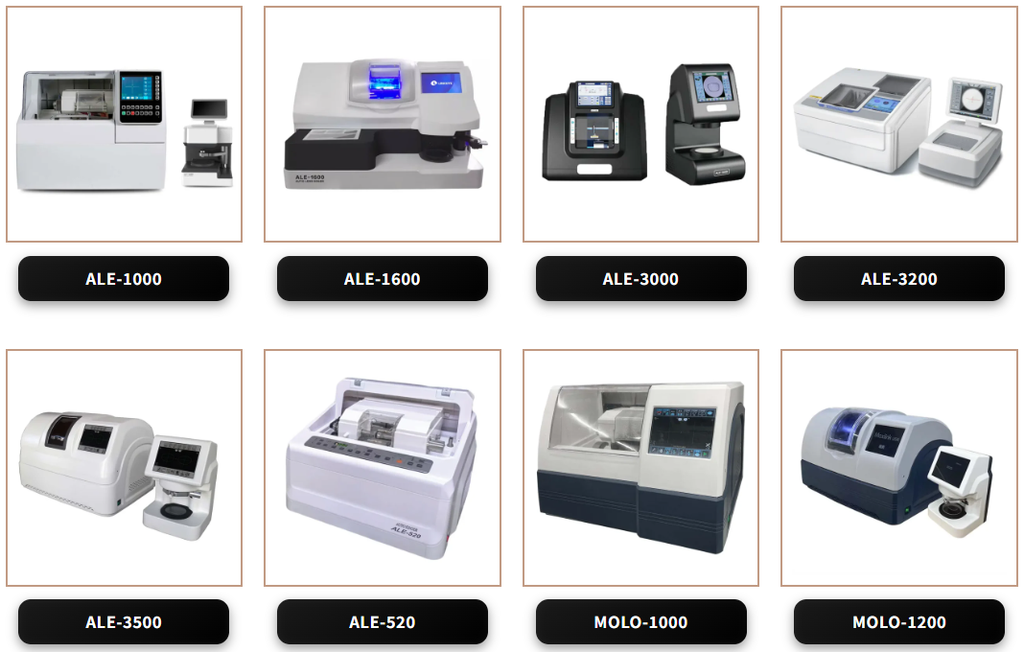
You can review the full LINK Instruments automatic lens edger machine range before requesting a quotation.
The Direct Manufacturer Purchasing Process
A reliable sourcing process can be kept simple:
Step 1 — Define the application.
State your business type, expected volume, lens materials, and required functions.
Step 2 — Shortlist manufacturers.
Check factory information, certifications, product range, and export experience.
Step 3 — Compare specifications.
Use the same technical checklist rather than comparing headline prices.
Step 4 — Request a quotation.
Ask for machine price, optional functions, warranty, spare parts, lead time, and shipping terms.
Step 5 — Confirm technical details.
Verify voltage, software, lens compatibility, accuracy, consumables, and installation requirements.
Step 6 — Evaluate after-sales support.
Ask how troubleshooting, replacement parts, calibration, and operator training are handled.
Step 7 — Place the order.
Confirm the final configuration and commercial terms in writing before payment.
For small laboratories, machine footprint and integrated tracing are especially important. LINK’s own guidance recommends considering material compatibility, compact design, internal grooving, safety beveling, and connection with a 3D frame tracer when selecting equipment for smaller operations.
Frequently Asked Questions
1. Where can I buy a lens edger machine directly from a manufacturer?
You can source directly from optical equipment manufacturers that provide factory information, technical documentation, certifications, and after-sales support. LINK Instruments offers direct access to its automatic lens edger product range.
2. What is the difference between a lens edger machine and a lens edging machine?
There is no functional difference between a lens edger machine and a lens edging machine.They generally refer to the same category of optical equipment. “Lens edger machine” is more commonly used when searching for the complete machine, while “lens edging machine” emphasizes the edging process.
3. Is an automatic lens edger machine suitable for a small optical shop?
Yes. A compact automatic model can reduce manual work and provide consistent edging. However, the machine should match the shop’s daily volume, lens materials, available space, and required finishing functions.
4. How can I reduce lens edger machine cost?
The most effective approach is to select only the functions required for your actual applications. Compare the total ownership cost, including consumables, maintenance, spare parts, shipping, and downtime—not just the purchase price.
5. Which lens edger machine should I choose?
Choose according to your workload and lens-processing requirements. Basic retail operations may need a compact automatic system, while optical laboratories processing complex lenses should prioritize advanced tracing, accuracy, material compatibility, and multi-function finishing.
conclusion: Best Choice for Direct Sourcing
The best choice is not necessarily the cheapest lens edger machine. For optical shops, clinics, hospitals, and distributors, the stronger option is a manufacturer that can provide the required processing functions, documented specifications, quality management, spare parts, technical support, and stable long-term supply.
LINK Instruments offers a variety of automated lens edger machines that allow buyers to choose devices based on the application, rather than buy a uniform system. For buyers who are prepared to compare prices of different models, specifications, and lens edger machine cost, the next practical step is to contact the manufacturer directly to obtain a configuration-based quote.
